Table of contents
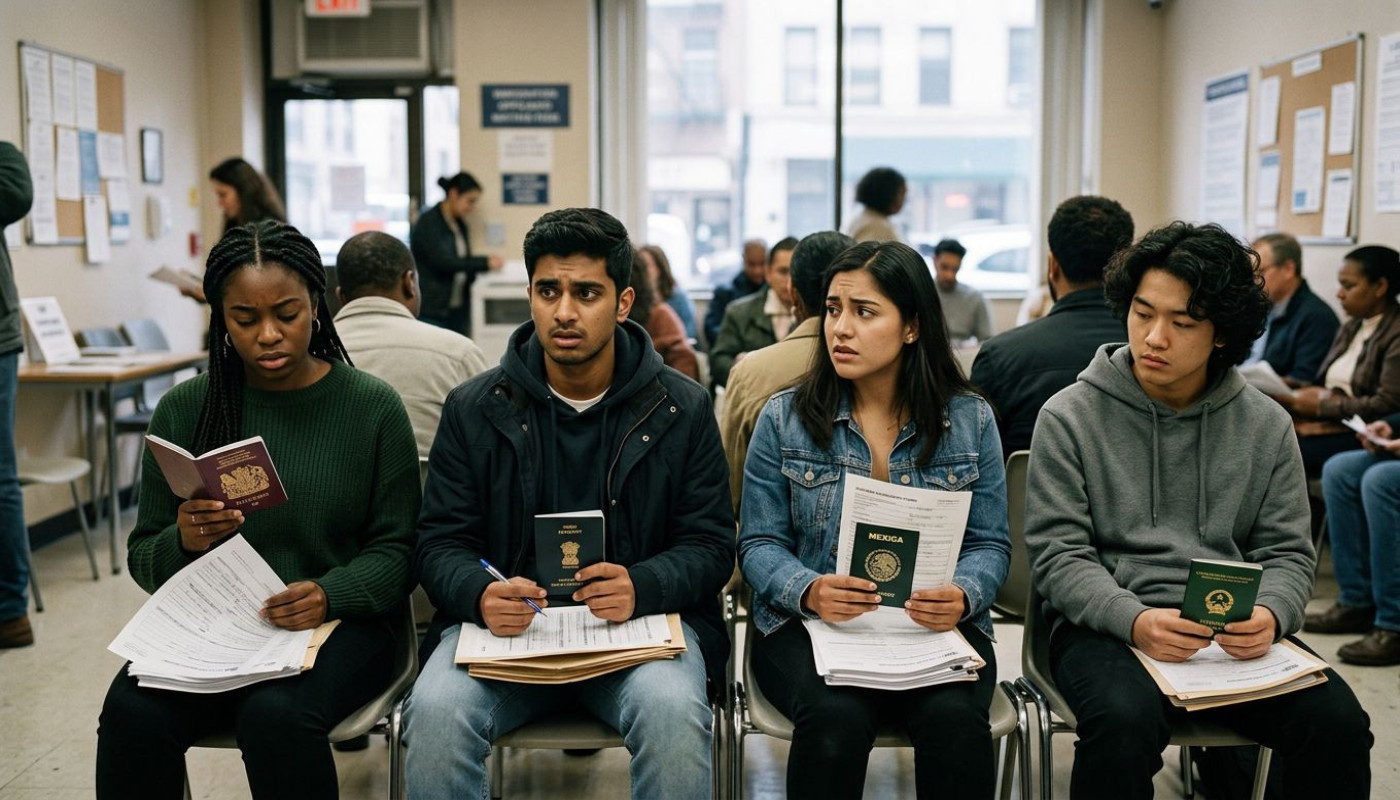
Paperwork decides lives, and in citizenship cases it can also decide futures, as legal clinics and migration lawyers report a steady rise in applicants who are “eligible on paper” but stranded in process, rejected on technicalities, or pushed into costly appeals. Across investor, family, and descent pathways, the same pattern keeps surfacing: missing evidence, mismatched identity records, and timelines that do not forgive delays. Behind every file number sits a story of plans paused, jobs declined, schools deferred, and families split across borders, while systems built to assess eligibility struggle under volume, verification demands, and uneven documentation standards.
Eligibility looks simple, until it isn’t
Ask any practitioner what “eligible” means, and you will get two answers: the legal definition, and the version that survives contact with an application portal. On paper, citizenship eligibility is usually a checklist, whether the route is birth, descent, marriage, naturalisation, or an investment-based programme, and that clarity can lull applicants into treating the process like a straightforward administrative task. In practice, eligibility turns into an evidentiary puzzle where the weakest link is rarely the applicant’s story, but rather the proof demanded to make that story legible to an authority that must defend its decision under scrutiny.
Identity is where many cases first unravel. A single missing middle name, a transliteration difference between Latin and non-Latin scripts, or a birth certificate reissued decades later with a corrected date can trigger requests for more documents, not because the claim is doubtful but because the record chain must be coherent from start to finish. Lawyers routinely see “document cascades”, where one clarification generates another request, and the file moves from a clean submission into an iterative, months-long exchange. The consequences are not theoretical: processing delays can collide with expiring visas, job offers that require mobility, or schooling deadlines, and the longer a case sits, the more likely it is to intersect with a change in rules, fees, or evidentiary standards.
Then there is the harder category: people who are eligible under the law but cannot produce the kind of evidence the system expects. Civil registration quality varies dramatically across countries and decades, and conflict, displacement, and informal births can leave entire families with partial records. Authorities may accept alternative evidence in some circumstances, yet that discretion is uneven and can feel opaque, especially when the applicant is trying to interpret requirements without counsel. Eligibility, in other words, is not merely a legal threshold; it is an administrative performance, and the outcome often depends on whether the applicant can anticipate how an officer will read the file, and how quickly they can respond when the file is read against them.
The hidden cost of “just one more document”
Who pays for uncertainty? Almost always the applicant, and the bill is rarely limited to official fees. Each additional request can mean notarised translations, apostilles or legalisations, courier shipments, and time away from work to chase archives or consulates. Even when each step seems manageable, the cumulative cost can become punishing, particularly for families submitting multiple sets of records. It is the slow grind of administrative friction that turns a lawful pathway into an endurance test, and for some it becomes the reason they abandon a claim they could have won.
Data from the European Commission’s 2023 “State of Schengen” report underscores how mobility-adjacent administration can buckle under pressure, noting persistent backlogs in several migration-related processes, and pointing to uneven capacity across Member States as a recurring challenge. While citizenship decisions sit in a distinct legal category, applicants experience the same reality: a system that must be rigorous, yet is not always resourced to be fast. In the United States, the Department of Homeland Security’s Office of Inspector General has repeatedly flagged operational and oversight weaknesses across immigration processes in recent years, and even where the findings focus on specific programmes, the broader lesson is familiar to applicants everywhere: when volume rises, errors and delays multiply, and the individual carries the risk.
The human cost sits behind the receipts. Families can end up with “status limbo”, where one spouse’s case moves and the other stalls, or where a child’s eligibility depends on a parent’s approval that does not arrive in time. Professionals accept overseas postings only to discover that travel restrictions or residence requirements complicate their eligibility timeline, and students who plan to study under one nationality face last-minute changes in tuition classification or visa obligations. These are not dramatic stories of fraud or deception; they are ordinary lives shaped by the gap between the law’s promise and the bureaucracy’s pace.
It is also where secondary markets thrive. When applicants feel lost, they seek intermediaries, sometimes reputable, sometimes not, and they pay for “certainty” that no agent can truly sell. The more complex the evidentiary chain, the more vulnerable the applicant becomes to bad advice, especially in cross-border contexts where local document practices are unfamiliar. Rigour is necessary in citizenship, but the process often shifts from rigour into procedural overload, and the result is a system where a missing stamp can matter more than a compelling, lawful claim.
Why some choose a different route
When the standard pathways feel like a maze, people start asking a different question: is there a route designed for speed and clarity? That is where interest in investment-linked citizenship has grown, especially among internationally mobile entrepreneurs and families seeking predictable processing, clearer document lists, and a defined timeline. The appeal is not merely “a second passport”; it is the promise of a process that is structured, transparent about requirements, and less vulnerable to years of back-and-forth over civil records that may be impossible to reconstruct.
Globally, investment migration sits under a bright spotlight. The European Parliament has criticised “golden passport” schemes in the EU context and pushed for tighter standards, and several jurisdictions have adjusted or closed programmes amid concerns about due diligence and security. That scrutiny has not killed demand; it has changed what applicants look for. They ask about vetting, source-of-funds checks, and the stability of the legal framework, and they increasingly weigh reputational risk alongside mobility benefits. In other words, the market is maturing, and applicants have become more cautious, not less interested.
Vanuatu remains one of the countries frequently cited in this conversation because its programme is known for defined procedures and comparatively fast timelines, subject to due diligence and evolving government requirements. For some families, the motivation is practical rather than speculative: they want a back-up plan for travel disruption, they want to reduce paperwork across multiple jurisdictions, or they are trying to ensure that their children’s future mobility is not hostage to a single country’s administrative calendar. In that context, informational resources matter, because the difference between a smooth file and a rejected one often lies in how early an applicant understands what will be checked, how funds must be documented, and which documents must be issued in what form.
Readers researching this option typically start with a simple step, comparing official requirements, timeframes, and document lists before speaking to a professional, and that is why some are directed to sources explaining how to buy vanuatu citizenship through the country’s established investment pathway. The value of any such resource is not in marketing promises, but in clarity: what is required, what is not negotiable, and what applicants should prepare before they spend money on translations, notarisation, and financial documentation. In a world where eligibility can collapse over small inconsistencies, predictability becomes a feature people are willing to pay for.
What applicants can do before filing
Want to reduce the odds of getting stuck? Start by treating your application like an audit file rather than a form, and build a coherent narrative that your documents can sustain. The basic discipline is surprisingly effective: standardise your name across records, document every change, and assume that any discrepancy, however minor, will be noticed. If you have multiple passports, dual spellings, or a history of address changes, prepare a simple chronology and keep supporting proof ready, because a request for clarification is easier to answer when the evidence is already assembled.
Translations and legalisations deserve early attention. Many applicants lose weeks because they translate the wrong document version, or they legalise a record that later gets replaced by a newer issuance date. Where apostilles are required, check which authority issues them in the country of origin, and confirm whether a notarisation must precede the apostille, because the order matters. For financial evidence, expect deeper questions than a bank balance snapshot. Authorities and due diligence providers often look for consistency between income, assets, transfers, and tax records; if your funds come from a business sale, dividends, inheritance, or property, assemble the supporting agreements and filings that show a clean trail, and keep them in a format that can be verified.
Time planning is the other silent determinant. Some routes have residence requirements, physical presence rules, or deadlines tied to age, marital status, or parental eligibility, and missing a window can change the legal basis of the claim. Applicants should also track policy volatility. Governments can tighten evidence standards, raise fees, or adjust processing priorities, and even if the law does not change, operational shifts can alter timelines. That makes “when to apply” part of eligibility, not merely a logistical detail. Finally, do not underestimate the value of an expert review before submission, because a well-prepared first filing can be faster and cheaper than an imperfect one followed by months of remedial documentation.
Planning your next step, realistically
Before you commit, map your timeline and your costs: official fees, legal support, translations, and travel, and then compare them with the risk of delay in your current status. Book a consultation early if your case involves name changes, missing civil records, or complex finances. Ask specifically about processing time, document validity periods, and available fee waivers or support measures where they exist.
Similar

Visitax for Mexico: how to get out of it?

What is off-site SEO?

What can we learn from the eRowzFinder ?

How to choose a timelapse camera?
